Why You Shouldn't Use AI to Design or Budget Your AV System
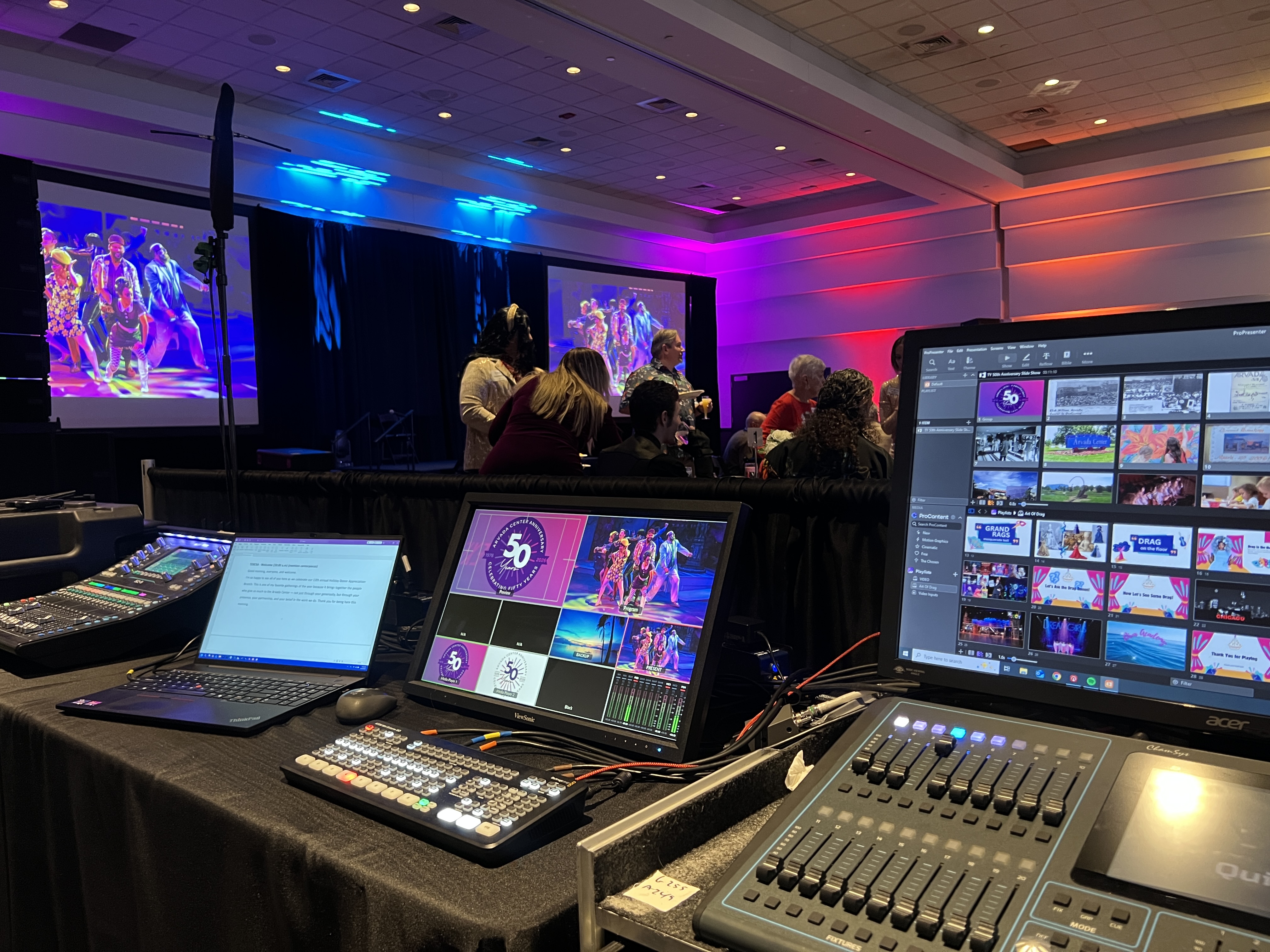
You want your space to work.
You want presentations to be crisp, music to sound great, and every person in the room to see and hear exactly what they're supposed to. You want technology that disappears into the experience, not a tangle of cables and a "can everyone hear me?" at the start of every meeting.
And maybe you turned to AI for help.
It makes sense. It's fast. It's free. It sounds confident. But here's the hard truth:
AI cannot design your AV system. And it certainly can't budget it.
Let's break down why.
AI Doesn't Know Your Space
Every room is different.
Some have glass walls and hard floors that bounce sound everywhere. Some have high ceilings, low ceilings, or ceilings full of ductwork. Some get blasted by afternoon sun that washes out every screen. Some are wide, some narrow, and some just plain weird.
AI doesn't know that.
It has no idea what your space looks, sounds, or feels like. It doesn't know how many people use it. It doesn't know if your team is tech-savvy or tech-averse. It doesn't know whether the room hosts board meetings, live music, classes, or Friday night dinner service.
It can't see your building, and it doesn't ask the right questions.
Real pros walk your space, ask questions, and listen… literally. They measure reflections, check sightlines, calculate delays, and design for clarity. AI just guesses.
AI Gives You a Fake Budget
You ask a chatbot: "How much should a conference room AV system cost?"
It says something like: "$3,000 to $8,000 should do it."
Sounds good. Feels reasonable. Total fantasy for most projects.
Real commercial AV systems range from a few thousand dollars for a simple room to well into six figures for larger or more complex spaces.
Why the range? Because:
- Cable has to be run through walls and ceilings
- You might need new power circuits or network drops
- Displays and speakers have to be mounted and rigged safely
- The room may need acoustic treatment
- The system needs to be installed, programmed, calibrated, and tested
- Your team needs to be trained
AI doesn't know this. It doesn't factor in labor. It doesn't think about structural mounting, fire code, insurance, or the cost of lifts and scaffolding. It spits out numbers that make you feel good but aren't rooted in reality.
AI Suggests Mismatched Gear
"Just get a [insert brand] display and some [insert brand] speakers."
Ever heard that one? AI has. It repeats what it has seen, which is… not much about your actual building.
It doesn't know if that display works with your video conferencing platform. It doesn't care whether your speakers are underpowered for the room or whether the wireless mics it picked will fight with other devices on your network.
It has no grasp of:
- System integration
- Signal flow
- Control systems
- Network requirements
- Cable lengths and distances
It doesn't understand your workflow. It doesn't know that your CEO hates complicated remotes or that your front-of-house staff needs to change the music without calling IT. It doesn't know what your space actually needs.
AI is a parrot. It's not an engineer.
AI Doesn't Install Anything
Even if the gear list was perfect (it won't be), who's installing it?
AI won't climb a ladder. It won't mount a display. It won't tune a room. It won't train your team.
And it won't take responsibility when things go wrong.
Real integrators do.
They measure twice, mount to structure instead of drywall, run power and low voltage safely, work after hours so you're up and running by Monday morning, and answer their phones when you need help.
AI can't do that.
The Stakes Are Too High
In most spaces, AV isn't background.
It carries the experience.
Every meeting, class, event, and guest interaction depends on technology that works. When it fails, it distracts. When it works, it disappears.
That level of impact deserves precision, not a chatbot.
Use AI for What It's Good At
To be fair, AI has its place. It can help you draft a project brief, brainstorm questions to ask before you hire someone, or explain what a term like "signal flow" or "DSP" means so you walk into your first meeting prepared.
Just don't let it design the system or set the budget. Use it to get smarter, then hand the real work to someone who can stand in your room.
What You Should Do Instead
Bring in a pro.
Not someone who sells boxes. Someone who listens, plans, and delivers. Someone who treats your space like a unique environment, not a showroom.
At Equalized Productions, that's how we work. Brand-agnostic. White-glove service. We design systems that are simple to use, powerful when needed, and built for clarity.
With 25 years in the business, we've done it for offices, schools, restaurants, venues, and houses of worship across the country. See our projects here.
Final Thought
AI can help you write a project brief. It can explain what a DSP does.
But it can't walk into your space and tell you how it sounds.
Trust your project to someone who can.
Let's build something that lasts.
Planning a new AV system or upgrading an old one? Contact us for a real conversation.